A man experiencing knee pain

London Cartilage Clinic · The TriCombo guide

TriCombo evidence: glucosamine, chondroitin and hyaluronic acid

Explore the glucosamine, chondroitin and hyaluronic acid formulation, physical cross-linking and published research on a related combination injection, with the Bioport brochure available to download.

At a glance

Designed around the joint’s lubricating environment

Bioport TriCombo is a glucosamine, chondroitin and hyaluronic acid injection given directly into the knee joint. The product’s rationale combines a mechanical aim, supplementing joint fluid, with ingredients associated with the cartilage environment.

The glucosamine in TriCombo is N-acetylglucosamine (NAG). Chondroitin sulfate and hyaluronic acid are both glycosaminoglycans (GAGs), the long sugar chains that give joint fluid and cartilage their structure. Understanding the formulation and the research separately makes the science easier to follow: the formulation explains what is placed into the joint and how it is designed to behave, and research explores outcomes such as changes in fluid properties, pain, function and movement.

As far as we are aware, TriCombo is the first glucosamine injection given directly into the knee joint to be offered in the UK.


Inside the formulation

A closer look at the three components

Each ingredient has a role. Together they underpin Bioport’s approach to joint lubrication and cartilage support, with glucosamine and chondroitin sulfate alongside hyaluronic acid.

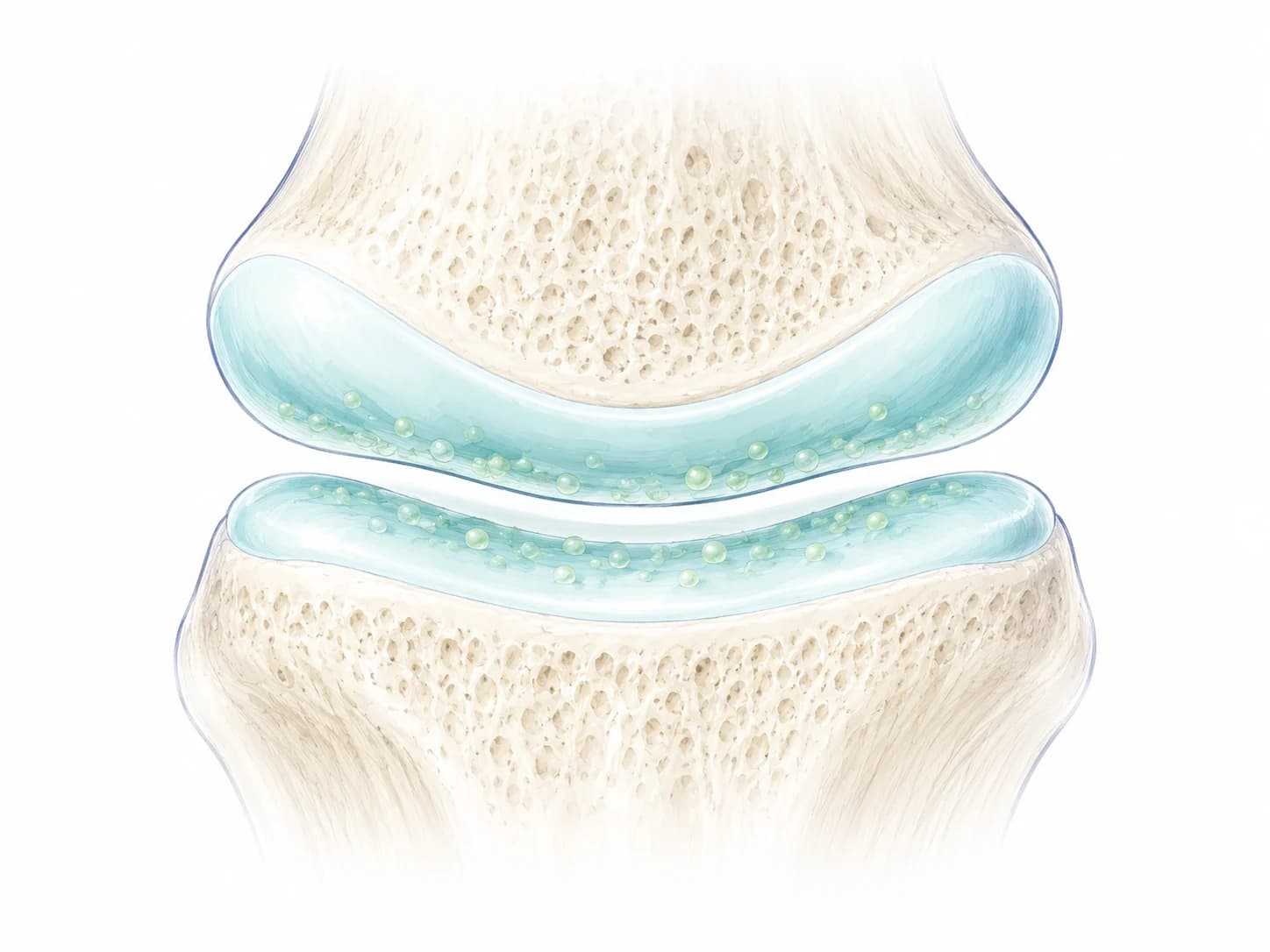
Glucosamine, a building block of cartilage. Illustration, not to scale.
01

Glucosamine

N-acetylglucosamine (NAG)

The form of glucosamine used in TriCombo, an amino sugar included for its relationship to the molecules that form cartilage and joint fluid. Here it is delivered by injection into the knee rather than taken as a tablet.

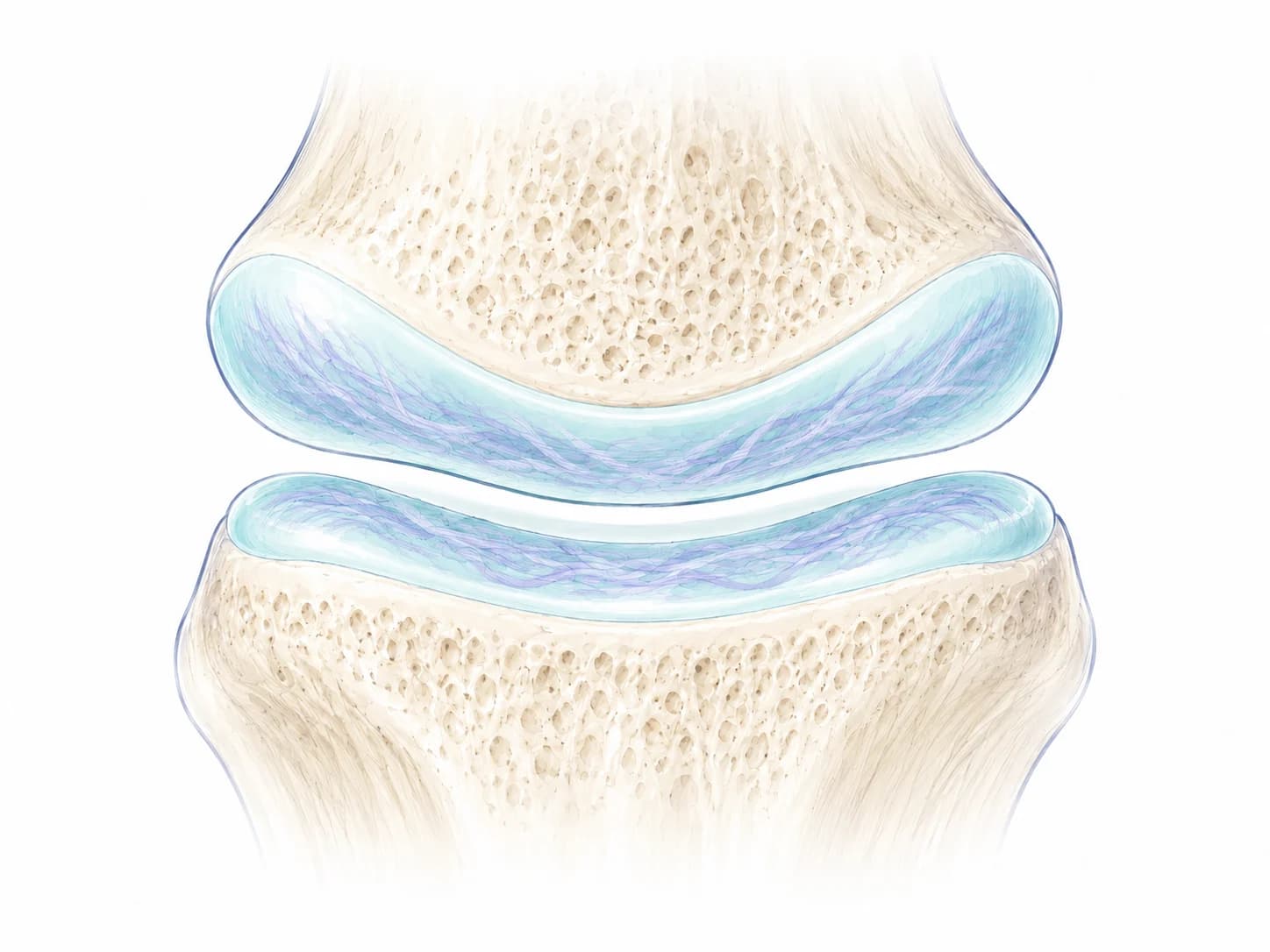
Chondroitin, part of the cartilage matrix. Illustration, not to scale.
02

Chondroitin sulfate

Chondroitin sodium sulfate

A glycosaminoglycan (GAG), one of the long sugar chains that give joint fluid and cartilage their structure. Combined with hyaluronate, it forms the physically associated polymer network described by Bioport.

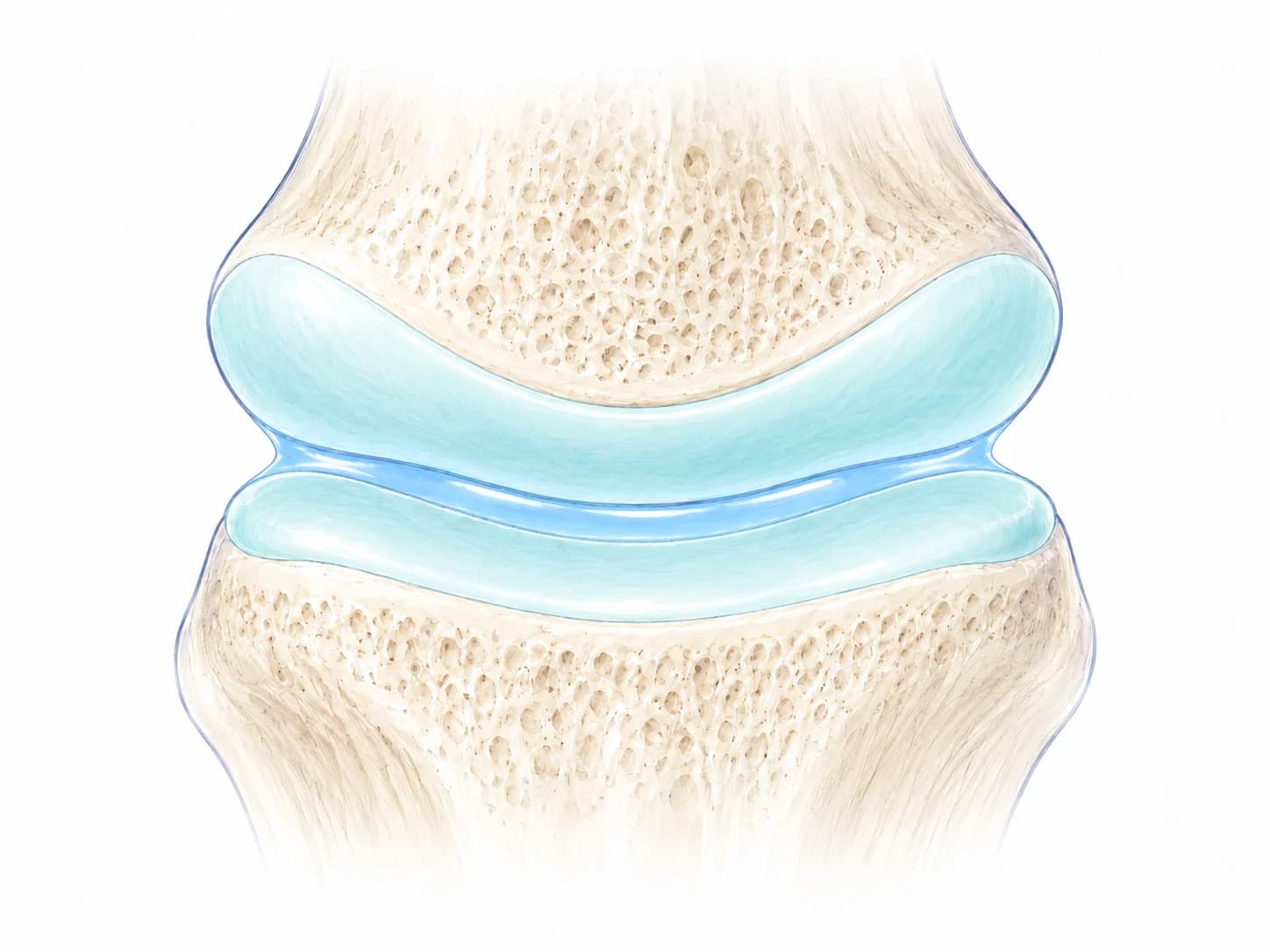
Hyaluronic acid, the lubricating fluid. Illustration, not to scale.
03

Hyaluronic acid

Sodium hyaluronate

Also a glycosaminoglycan (GAG) and the lubricating component of the formulation, intended to support the mechanical environment of the knee.

01 · The science explained

Glucosamine: the first component

Glucosamine is an amino sugar associated with the molecules that form cartilage and joint fluid. In TriCombo it is supplied as N-acetylglucosamine (NAG), the form of glucosamine used in this product.

That matters when you read about glucosamine elsewhere. Most research and most products concern tablets or capsules. Taken as a tablet, glucosamine has to survive digestion and reach the joint through the bloodstream, whereas TriCombo places glucosamine in the joint itself by injection, with chondroitin and hyaluronic acid beside it. Products labelled glucosamine vary in composition and route, so check which one a study or product actually concerns. Bioport discusses cartilage-supporting processes in its ingredient explanation; these give a rationale for the design, while the practical goals at consultation remain knee comfort, function and activity.

  1. 1Glucosamine (NAG)
  2. 2Chondroitin sulfate
  3. 3Hyaluronic acid

Chondroitin sulfate: the second component

Chondroitin sulfate is a glycosaminoglycan associated with cartilage. In TriCombo it is included alongside hyaluronate rather than being presented as a separate oral supplement, and Bioport describes physical association between the two polymers as an important part of the formulation.

That distinction matters when reading about the product. Research on a capsule, a different injectable mixture or an isolated ingredient answers different questions. The relevant starting point here is the combination delivered into the joint, followed by how that formulation behaves and the clinical context in which it is used.

Hyaluronic acid: the lubricating component

Hyaluronic acid, also called hyaluronan, is central to the concept of viscosupplementation. In TriCombo it is the third ingredient, and it contributes to the solution’s physical properties. Those properties help explain why injection products can differ even when they share an ingredient name.

For patients, viscosity can be thought of as resistance to flow, while elasticity concerns the way a material responds to loading. A knee experiences changing loads during walking and other activity, so looking at both properties is more informative than describing an injection as thick or thin.

04 · The science explained

Physical cross-linking and the gel network

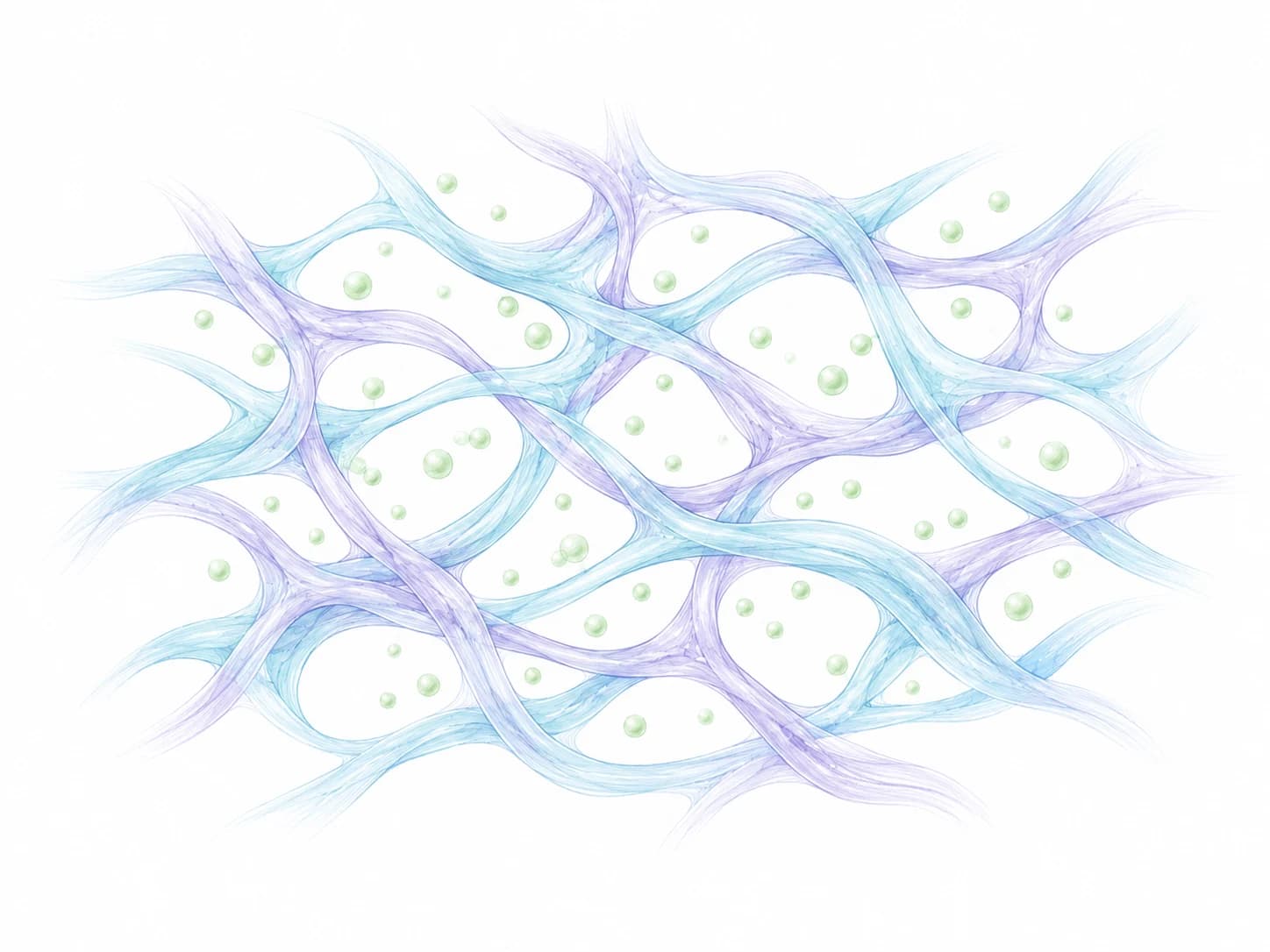
Cross-linking describes interactions that help create a network within a material. Bioport describes TriCombo’s network as physically associated through interactions including hydrogen bonding, rather than chemical or irradiation cross-linking.

This design is intended to influence the stability and behaviour of the gel. It provides a useful explanation of why the three-component formulation is more than a list of ingredients. The Bioport brochure includes the manufacturer’s technical account for readers who would like to explore the product chemistry in greater depth.

Hyaluronic acid and chondroitin form a physically associated network, with glucosamine alongside. Illustration, not to scale.

05 · The science explained

Human research on a related combination formulation

A 2025 observational study examined Kombihylan, a formulation containing N-acetylglucosamine, chondroitin sulfate and hyaluronate, in 52 people with moderate knee osteoarthritis. It compared injection with and without an accompanying physiotherapy programme and examined joint-fluid properties over six weeks.

The study reported more favourable fluid viscosity and viscoelasticity with the combined approach. This is research on lubrication and rehabilitation, rather than a direct measure of long-term symptom relief. Bioport’s brochure identifies TriCombo’s active principles as Kombihylan, and the study is cited here under that published product name.

  1. 152 participants
  2. 26-week follow-up
  3. 3Joint-fluid measurements

06 · The science explained

From formulation to your treatment plan

The scientific discussion becomes useful when it connects to a clinical goal. At London Cartilage Clinic, that means looking at the diagnosis, the activities limited by the knee, previous treatment and the approach to rehabilitation after an injection.

If TriCombo is being considered, the consultation can explain why its approach fits the proposed plan and how the response will be reviewed. Use the brochure and research link to explore the background, then bring the questions that matter to your decision: what the treatment aims to improve, what the appointment involves and how progress will be assessed.

Professor Paul Lee in the clinic
Discuss your individual plan at London Cartilage Clinic

Manufacturer formulation specifications

The formulation in numbers

Glucosamine (NAG) per syringe
67.5 mg
Chondroitin sulfate per syringe
67.5 mg
Hyaluronic acid per syringe
36 mg
Stated average molecular weight
3 MDa
Source: Bioport TriCombo brochure, page 2 ↗

Published research · 2025

Joint-fluid properties after a combination injection and physiotherapy

This observational study examined Kombihylan in 52 people with moderate knee osteoarthritis. It compared injection with and without physiotherapy and measured synovial-fluid behaviour over six weeks.

Published in the Journal of Clinical Medicine. Bioport’s brochure identifies TriCombo’s active principles as Kombihylan, and the study is cited under that name.

Read the complete research paper ↗

Read the original documents

Explore the TriCombo product brochure

Take a closer look at the formulation and product information before your consultation.

consulting-in-office-with-pen

Your TriCombo questions, answered

What does viscoelastic mean?

It describes a material with both fluid-like and elastic properties. In a joint injection, those properties are relevant to how the solution behaves as the knee moves and bears load.

What is physical cross-linking?

It refers to interactions that help hold a molecular network together. Bioport describes physical association between hyaluronate and chondroitin sulfate in TriCombo, rather than chemical or irradiation cross-linking.

Why does the research mention Kombihylan?

The published study uses that product name, and Bioport’s brochure identifies TriCombo’s active principles as Kombihylan. We cite the study under its published product name.

What did the 2025 study measure?

It investigated synovial-fluid rheology, meaning the fluid’s flow and elastic behaviour, after injection, with and without physiotherapy. It provides information about the joint-fluid environment and the combined approach.

Where can I read the full product explanation?

The eight-page Bioport brochure is linked below, with information on the ingredients, formulation, intended use and manufacturer treatment schedule.

Still have more specific concerns?

Free Discovery Call

Make a plan for your knee

Discuss your symptoms, previous treatments and goals with the London Cartilage Clinic team, who will confirm TriCombo availability and provide a written quotation.

Privacy & Cookies Policy
Free Discovery Call